Rotate the anchor
Keep a protein or carb you like, and change what surrounds it twice a week.
Helsinki studio · meal variety
We believe varied meals support a more enjoyable everyday pace when you treat food as a creative constraint: enough structure to shop calmly, enough rotation to keep the table interesting. This site offers patterns and questions—not prescriptions, promises, or medical guidance.
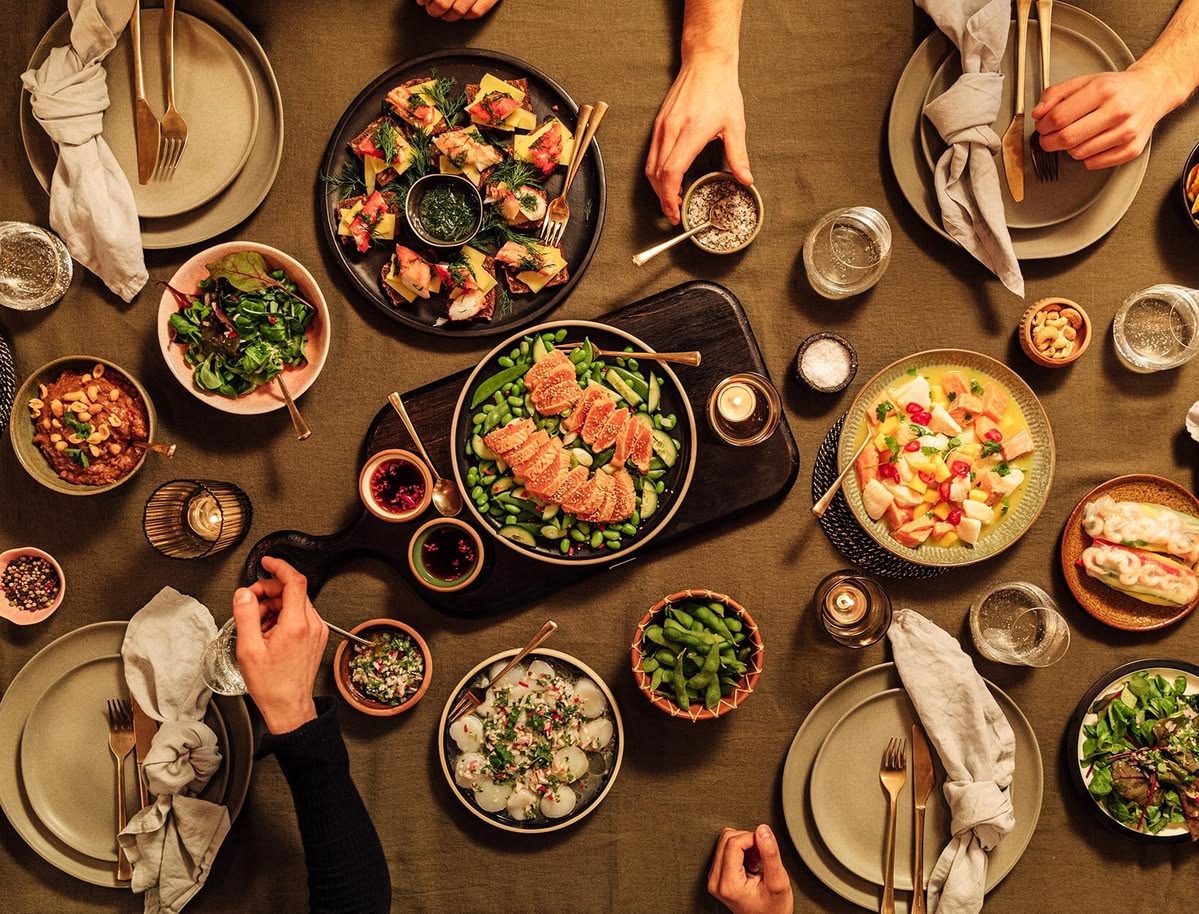
Kitchen fatigue often comes from sameness, not from a lack of willpower. When shopping lists repeat the same color bands and the same cooking methods, meals blur together. Small rotations—an herb you rarely buy, a grain you have not cooked in a year, a cold plate where you usually serve hot—refresh attention without asking you to follow an elaborate scheme.
Keep a protein or carb you like, and change what surrounds it twice a week.
Swap the acid line, not the whole recipe, when time is short.
Follow a rich course with a lighter assembly meal the next evening.
These are prompts, not rules. Use them in order or borrow one or two; the point is a readable rhythm your household can agree on in plain language.
Write the three ingredients you always buy, then circle one to vary within the next fortnight. That single circle is enough novelty for a busy week.
Crisp, velvety, or crunchy: pick a texture the week has lacked and add it in a small side, not a new main project.
Combine bread, spreads, vegetables, and pickles without timing everything to finish at once. The mess is the point; it still counts as a meal.
If you used the oven yesterday, use the stovetop today, even with similar ingredients, so the room smells different and hands stay interested.
Notice what you would repeat on purpose, what felt forced, and what could wait until a less crowded season. A short note on paper beats another app task.
Plant foods bring different pigments and fibers; aiming for a wider spread over the week often goes hand in hand with a more varied nutrient profile, described in general education terms. We do not count your plates or turn variety into a score.
When more than one person cooks, a simple vocabulary—heavy, bright, one-pan, cold—keeps the plan legible to everyone, including younger helpers.
Jarred beans, tinned fish, and frozen vegetables are legitimate rotation tools. Variety includes reliable backups, not only novelty ingredients.
We reference northern European produce rhythms without pretending every reader shops in the same market. Choose the seasonal idea that matches where you live.
Discipline, for us, is the practice of small honest adjustments—curiosity is what keeps them from feeling like punishment.
We describe patterns for illustration. Nothing here is a target you must hit, a diagnosis, or a claim about how any individual will feel after a change in diet.
We do not name diseases, offer therapeutic promises, or suggest that a single way of eating suits every body. We do not use fear to motivate change, and we do not ask you to share identity details to read free pages. If you work in a field that requires personal nutrition or medical care, this site is only a supplement to the relationship you have with a qualified professional who knows your full context in the jurisdiction where you live.
The Variety page walks through mix-and-match cooking modes; the Nutrition page puts EU-style labels in everyday words. The contact form is the right place for questions about the site, accessibility, and privacy.